
Originally published 2019 by Lalaine Barbosa. Editorial reconsideration and updates by Eileen Cotter Wright, 2026.
A note from the editor
This article was originally published on Pure Wander in 2019, written by guest contributor Lalaine Barbosa about her visit to a husky cafe in Bangkok. At the time, animal cafes were a growing trend across Asia, and the welfare conversation around them was still in early days. Lalaine’s experience was honest, and her instinct to ask ethical questions at the end of her piece was ahead of where most travel writing was in 2019.
Seven years later, the conversation has matured significantly, and so has my own thinking. I’m leaving Lalaine’s original experience preserved below as the historical record of one traveler’s 2019 visit, because rewriting someone else’s experience would be dishonest. But I’m adding this updated framing because what we know now about animal welfare in tourism, and specifically about arctic-bred dogs in tropical climates, means I no longer feel comfortable having this article live on the site as it was originally framed.
If you’re researching whether to visit a husky cafe in Bangkok, this is what I want you to know.
The core welfare question
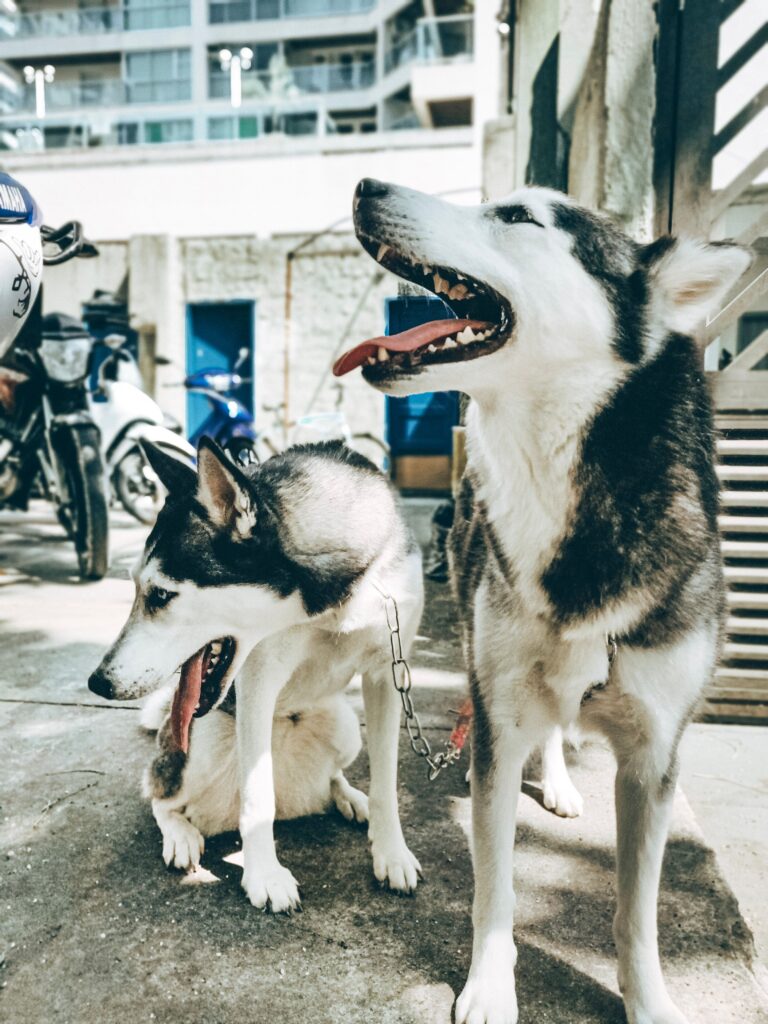
Siberian Huskies were selectively bred over centuries by the Chukchi people of northeastern Siberia to pull sleds across snow at extreme low temperatures. Their double coats, dense undercoats, and metabolism all evolved for cold environments. Bangkok averages above 90°F year-round, with humidity routinely above 80%.
This isn’t a matter of opinion. Peer-reviewed veterinary research has consistently documented that Siberian Huskies experience measurable heat stress in tropical climates, even when their owners take precautions. A 2023 study of huskies living in Brazil (climatically similar to Thailand) found that owners themselves recognize the breed as “low-heat-tolerant” and observe ongoing heat-defense behaviors. Veterinary literature also notes that as global temperatures rise, the susceptibility of cold-climate breeds to heatstroke in tropical regions is expected to increase.
Air conditioning and limited play sessions can mitigate the worst of this. They cannot remove the underlying mismatch between the breed and the environment.
What about the specific cafe?
True Love at Neverland (the cafe Lalaine visited and still the most-visited husky cafe in Bangkok) appears, by industry standards, to be one of the more responsibly-managed operations of its kind. Recent visitor reports from 2024 to 2026 describe air-conditioned indoor spaces, limited session sizes, no forced photo posing, attentive staff, and dogs that appear well-groomed and cared for.
To be straight with you, I’m not in a position to evaluate the day-to-day welfare of these specific dogs from a desk in Boston. The owner does seem to care deeply about her animals, by all accounts.
But the question I’m asking now isn’t whether one specific cafe operator is doing their best. The question is whether the existence of these businesses, as a category, creates conditions we want to support as travelers.
A few honest concerns that no individual cafe can solve:
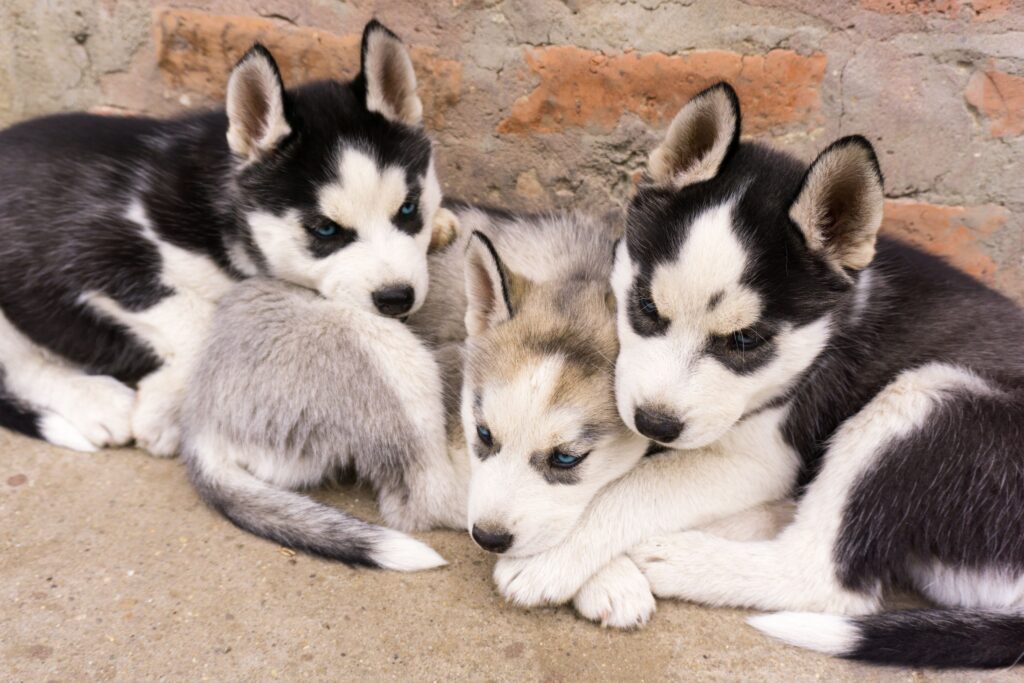
The breeding chain. For husky cafes to exist, huskies have to be bred to meet demand. Bangkok and broader Thailand now have an active market in Siberian Huskies and Samoyeds bred specifically for tourist-facing operations. The breeding side of the equation is much less visible than the cafe itself, and welfare standards in those operations are not consistently monitored.
The structural incentive. When tourists visit these cafes, they create demand for more huskies in Bangkok. That demand drives more breeding, more cafes, and operations that may not match the standards of the best-run venues. Voting with your tourist dollar matters.
The bigger animal-tourism picture. Thailand has a long, painful history of animal tourism that has caused real suffering, especially to elephants and tigers. The same instincts that make us want photo-ops with charismatic animals (huskies in this case) have driven much worse outcomes elsewhere. Welfare organizations including World Animal Protection have spoken broadly against animal cafes as a category, even ones that appear well-managed, because the structural concerns remain regardless of execution.
What’s changed since 2019
A few things worth knowing about how the conversation has shifted:
In 2019, when Lalaine visited, animal cafes were a relatively new phenomenon and the welfare critique was still developing. Even she ended her original piece asking ethical questions, which was ahead of most travel coverage at the time.
By 2026, multiple welfare organizations have published more specific guidance against animal cafes generally. Singapore SPCA has investigated welfare violations at cat and dog cafes. The peer-reviewed veterinary literature on tropical-climate impacts on cold-breed dogs has grown. And the travel industry conversation has shifted from “is this cafe well-run” to “should we be selecting animals for tourist photos based on their visual appeal rather than their suitability for the environment.”
I no longer think the answer to “should I visit a husky cafe in Bangkok” is even close to yes, regardless of how well any individual cafe is managed.
Ethical animal experiences in Thailand instead
If you love animals and want to spend time with them in Thailand, you have so many better options. These are organizations doing actual conservation, rescue, and welfare work, where your visit directly supports the animals rather than creating demand for more captive ones.
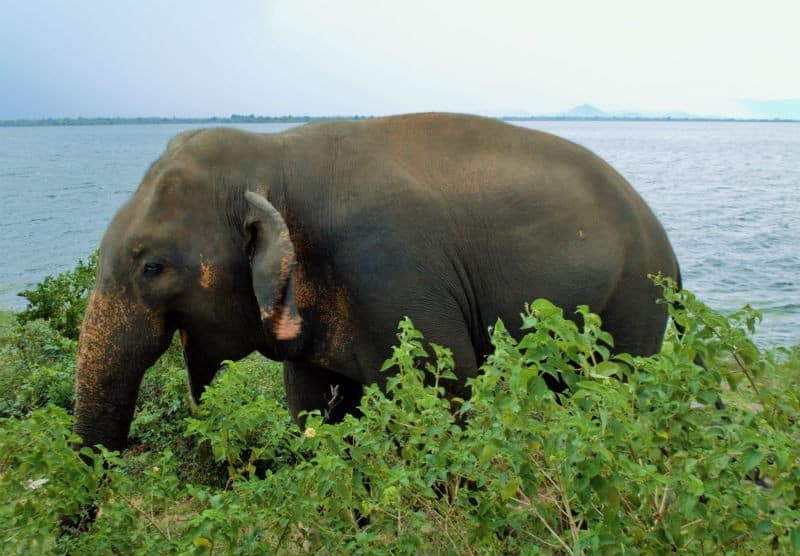
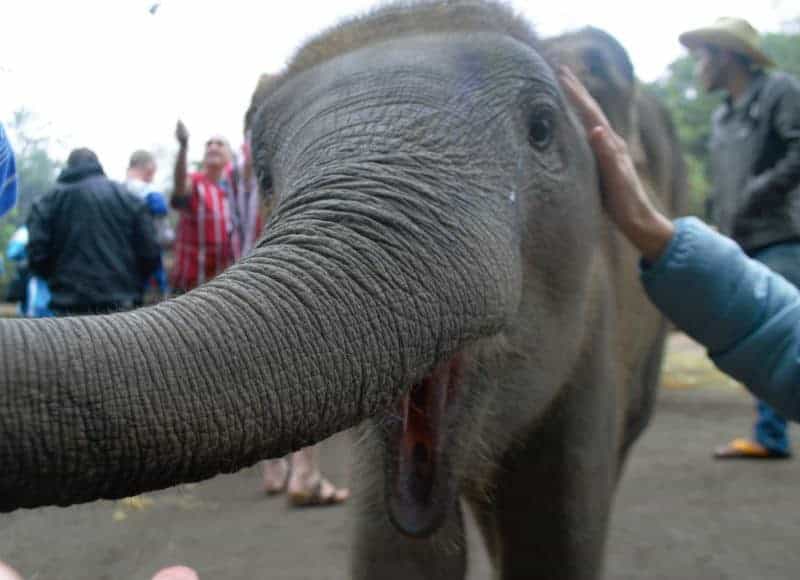
Elephant Nature Park in Chiang Mai. The gold standard of ethical elephant tourism in Asia. Founded in 1995 by Thai conservationist Sangduean “Lek” Chailert, the park rescues elephants from logging, circus, riding, and street-begging operations. Over 100 elephants live across 250 acres of land where they roam freely. No riding, no forced photos, no chains, no bullhooks. Half-day, full-day, and overnight programs available. Book well in advance.
Save Elephant Foundation. The parent organization of Elephant Nature Park, running sister sanctuaries in Surin, Cambodia, and Phuket. If Chiang Mai isn’t on your itinerary, check whether they have a sanctuary closer to where you’re traveling.
Wildlife Friends Foundation Thailand (WFFT). A multi-species rescue organization in Phetchaburi (about 2.5 hours from Bangkok) that cares for elephants, gibbons, macaques, bears, and other animals rescued from the illegal wildlife trade and abusive tourism. Day visits and longer volunteer programs available.
Soi Dog Foundation in Phuket. Thailand’s largest welfare organization for street dogs and cats, including dog meat trade rescues. You can visit, volunteer, sponsor a dog, or adopt internationally.
These organizations are doing the real work, and your visit (and the entry fee that supports it) actually helps animals rather than creating demand for more of them in unsuitable situations.
The original 2019 article (preserved as written)
The following is Lalaine Barbosa’s original 2019 piece, preserved for historical context. Some of the perspectives here reflect a less developed animal welfare conversation than where we are today. I’ve left her writing intact because rewriting her experience would be dishonest. Read it as documentation of one writer’s visit in 2019, not as a current recommendation. – Eileen
A longtime lover of all things animals, I swooned at the concept of a husky cafe. I remember the first time I went to an animal cafe – the concept had just started gaining popularity worldwide. I had been doing tons of research on Tokyo before moving there for my study abroad term. Excitedly, I wrote a never-ending list of unique to-dos in Japan. This list, of course, included visiting many types of animal cafes. Many cats, dogs, and hedgehogs later, it became somewhat of a therapeutic activity for me to visit one of these cafes.
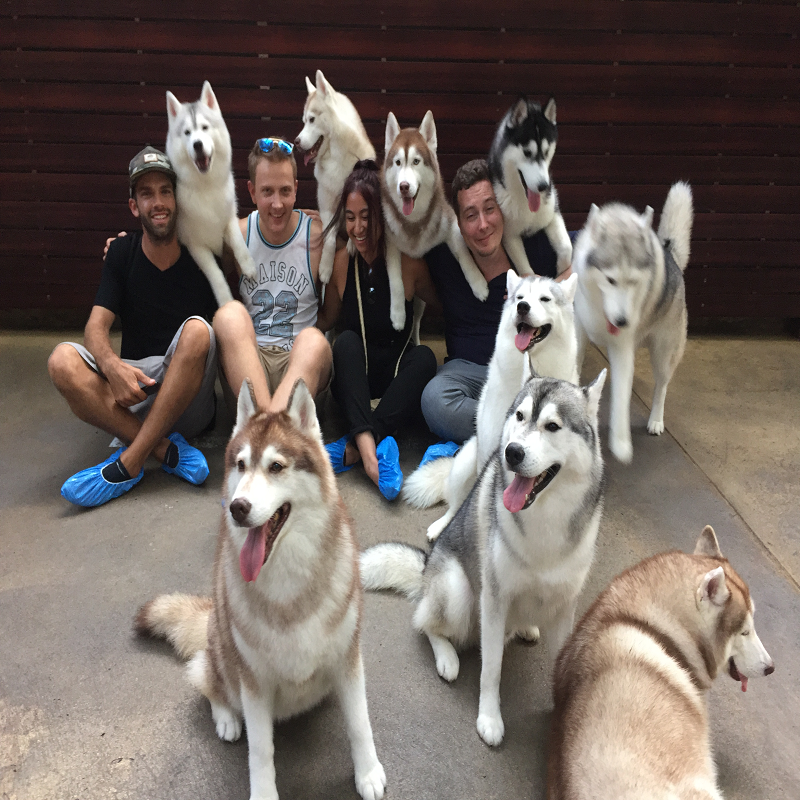
Fast forward to my recent trip to Thailand, I had a couple of extra days to wander around Bangkok, a vibrant city which I adore, when a local introduced me to TrueLove at Neverland. No, really, that’s the name. Fitting, right? And as per tradition, I decided to give this place a visit.
Reaching True Love at Neverland Husky cafe
The easiest way to reach this little slice of heaven is to take the train and get off at Ari Station. The actual cafe is tucked away in a residential part of Bangkok, so my group and I shared a taxi. In addition, there are plenty of tuk-tuks to take as an alternative. When we arrived, the lady at the desk informed us of the entry time, accepted our payment, then had us fill out a small form while we waited. It’s best to arrive a little early because there’s a big chance of them selling out (as our session was) and they don’t accept any reservations.
Fast Facts:
- 500 BAHT ($16 USD) per person
- 2 one-hour session per day: 12:30-2pm, 3:30-5pm
- Address: 153 Soi Ari Samphan 2, Samsen Nai, Phaya Thai, Bangkok, Thailand 10400
Pre-Playtime at the Husky Cafe
Once our session begins, we’re led inside to our table, where we then order our drink and ice cream cake flavor of choice once it’s our table’s turn to go. The drink and ice cream cake are all included with the 500 Baht fee; ice cream cake and huskies, I mean, what more could you ask for?
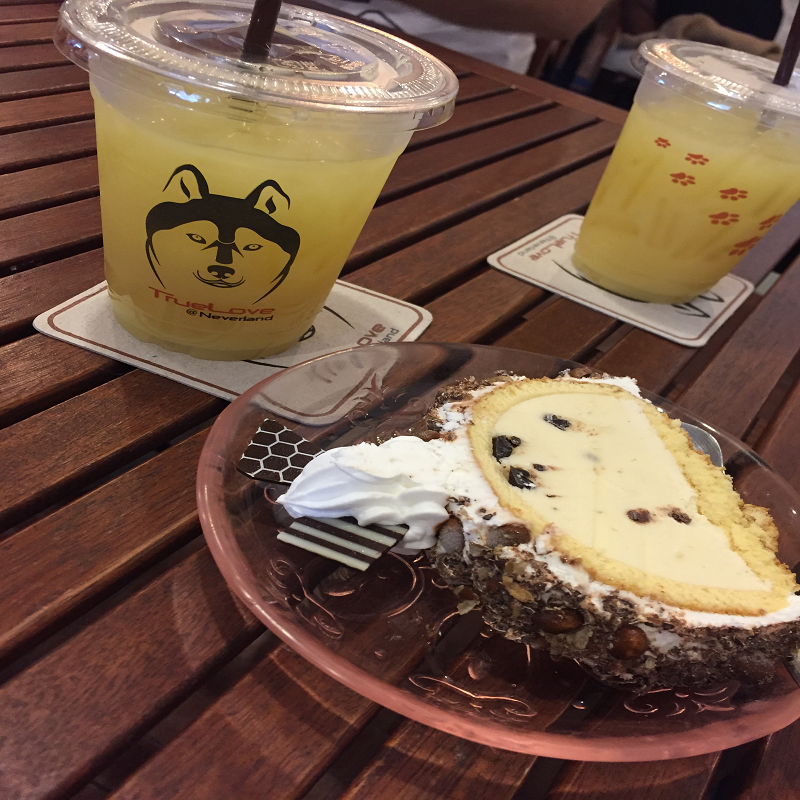
While we enjoyed our cake and chatted amongst ourselves, they got our attention by playing a video on each TV outlining some rules and introducing us to the dogs and the entire process. We learned that a woman actually owns and cares for all the dogs (aka her children) and the fee goes to the food and care for each of them. We were of course allowed to pet the dogs and take pictures, however, we were asked to not allow the dogs to lick us or expect them to obey our commands. After the video finished, we were asked to remove our shoes and place plastic covers over our feet before playtime. We then lined up for the sinks to wash our hands before entering husky heaven!
Playtime with Puppies!

Employees were around during playtime to keep an eye on the dogs, feed them, and assist anyone wanting photos. The main attraction was definitely the opportunity to take pictures with huskies on top of our shoulders. A few employees were there to lead the pups and take the picture for us. The huskies were so impressive, calm, and well-behaved! Many would continue to wander around. Others would lie in one spot and have people flock to them to take their photos. All in all, there were big smiles all around (from humans and dogs alike)!
Bangkok’s Husky Cafe Vs. Other Animal Cafes
The entire concept behind animal cafes – essentially having animals put on “display” – begs the question of the ethics behind all of this. Comparing my personal experience at other animal cafes with the TrueLove husky cafe, there’s a clear distinction. At other cafes I’ve seen, the animals are in one room from open to close waiting for visitors. Their environment was clean, they were being fed, and they were free to do as they please. However, some could still argue against these cafes.
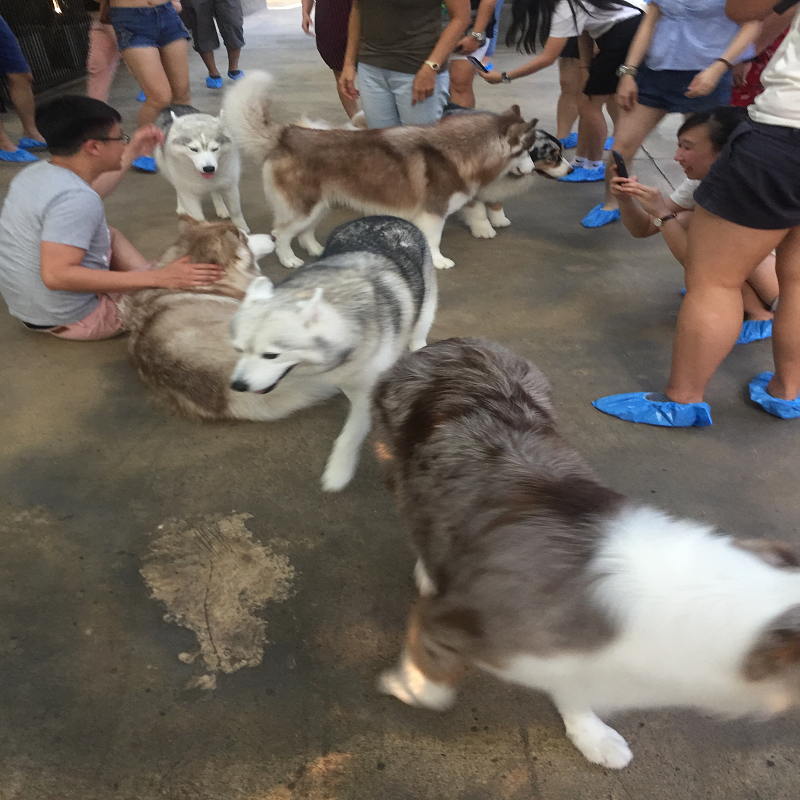
At TrueLove husky cafe, the owner and her employees take care of her dogs with the utmost care and respect. I admire the fact that there are only two one hour play time sessions per day, as I can understand that being constantly swarmed by crowds of people can be overwhelming or exhausting for animals (and all employees who take care of them)! This gives animals the freedom they need instead of having to cater to visitors all day.
In conclusion, the most important thing is that all the animals are happy, healthy, and comfortable with their surroundings. If you understandably feel hesitant about investing your time in animal cafes, it’s a good idea to do more research into the animal care for that specific place – or read up on PETA’s stance if you need a second opinion.
Ethics of Animal Tourism?
I think only in recent years, more people have become aware of the ethics of certain tourist activities. The most well known controversy is elephant riding or visiting tigers in captivity. Thailand is a hotspot for activities like this, and tourists come from all over the world to experience them. Behind the ‘exotic’ adventure is a number of elephants being taken away from their mothers and beaten in order to ‘train’ them for elephant riding. If you admire animals and would enjoy these environments, consider visiting ride-free elephant sanctuaries in Thailand instead.
While animal cafes aren’t anywhere near the same sphere as elephant riding, I think it’s a good starting point to open the discussion and questioning of ethical ramifications behind certain seemingly innocent tourist traditions. Traveling should be enjoyed and appreciated by all parties, but it’s crucial to take these facts into consideration when participating in activities all over the world. While not everything is black or white, we should go into these activities with an open mind and really consider if anything is being harmed in the name of tourism. After all, the old saying goes: we should leave something better than we found it.
What’s your position on animal cafes? Do you enjoy animal-related activities when you’re traveling?
Thanks for hanging out! If you’d like fresh updates on our latest guides, stories, and recommendations (even special deals!), please subscribe to my monthly Pure Wander newsletter.
Also, download our FREE PDF that shares all my best basics, from points and miles redemptions, choosing the right travel insurance, scoring free upgrades at hotels and more.
Follow along with me (Eileen!) on social: Instagram, Tiktok and PinterestCheers to adventure!






Animal tourism is such a touchy subject. I thought we did everything right by researching the best place in Thailand for elephants and found a ‘sanctuary’ without riding. But some of the animals are bred just for this too. I’m not sure. I think this husky place looks awesome and much better than most cafes – I went to a kitty one once and the poor things looked miserable, I didn’t stay!
Great article! I love animal cafes and like you, I’m constantly worrying about the ethics behind practices like these. I’m so glad you used your article as an outlet to talk about ethics and encouraged your readers to do some research before they take part in activities like these. If I ever go to Bangkok I will definitely try my best to visit True Love at Neverland and other animal cafes with similar ideals. (I wish there were more in the US!)
I love this article! Of course, it is a tough subject to talk about because when there are animals involved, the issue of abuse is also involved. I have never been to a cafe like this one, but the huskies look extremely happy and so do the people! If I ever visit Thailand, this destination will be first on my list!