Singapore is one of those cities that makes getting around feel almost too easy. The MRT is spotless and fast, taxis are everywhere, and you can cross half the island for a few dollars before lunch. It is also a brilliant launchpad. Some of the best food, shopping, and theme-park days of a Southeast Asia trip are not actually in Singapore at all. They are a short hop north, across the water in Johor Bahru, Malaysia.

That hop is where this gets interesting. Crossing from Singapore to JB has long meant jumping on a cross-border bus, and for good reason. It is affordable, frequent, and drops you close to the malls, markets, and onward coaches to places like Kuala Lumpur and Malacca. But in late 2026 a brand-new rail link arrives, and suddenly there is a faster way across. So the question a lot of travelers are asking is a simple one. Once the train opens, is the trusty Singapore to JB bus still worth booking?
| Quick answer: Yes, for many trips the bus stays worth booking even after the RTS Link opens. The RTS Link wins on raw speed across the Causeway (about a five-minute ride), but the bus still wins on price, luggage, and one-seat rides deeper into Johor and up to Kuala Lumpur. Choose by your destination, your bags, and the time you cross. |
Key takeaways
- The RTS Link is targeted to open by December 2026, with one-way fares of about S$5–S$7 and a roughly five-minute crossing.
- Cross-border public buses remain the most affordable way over, from around S$2–S$4.80 one way.
- The bus still wins for heavy luggage, off-peak comfort, and direct services to towns the RTS Link does not reach.
- Until the line fully ramps up, booking your seat early stays the safest bet.
Why This Question Matters in 2026
Around 300,000 people cross between Singapore and Johor Bahru every day, which makes the Causeway one of the busiest land borders on the planet. For years the choice was simple: take a bus, drive, or ride the KTM Shuttle Tebrau. That changes in 2026. If you normally search for an SG to JB bus and book a seat without thinking twice, the new rail link finally gives you another option worth weighing.
So let us break it down: what the RTS Link changes, where the bus still comes out ahead, and how to plan a smooth crossing while both run side by side.
What the RTS Link Changes Across the Causeway
The Johor Bahru to Singapore Rapid Transit System (RTS) Link is a short cross-border rail shuttle connecting Woodlands North in Singapore to Bukit Chagar in Johor Bahru. The line runs just 4 km in total (1.3 km on the Singapore side and 2.7 km on the Malaysian side), yet it is built to move big crowds quickly. Here are the headline figures from the operators and transport authorities:
Two details matter most. First, the RTS Link uses co-located immigration, so you clear both countries under one roof. Second, it is set to replace the long-running KTM Shuttle Tebrau train by mid-2027, making it the main rail option across the strait. Singapore’s transport authorities publish the latest project details, see the Ministry of Transport at mot.gov.sg and the Land Transport Authority at lta.gov.sg.
The big draw is predictability. Around 300,000 people cross the 1,056-metre Causeway every day, and on a bad afternoon a short hop can stretch past two hours. The train skips the road queues entirely. That speed reshapes the maths for daily commuters more than anyone.
It is worth remembering the RTS Link is not the only rail option. A separate shuttle train already crosses between Woodlands and Johor Bahru, and the Causeway buses have carried commuters for decades. The RTS Link simply adds a fast, high-frequency layer on top, aimed squarely at the people who cross every single day.
Who Gains the Most From the Switch
Not every traveller will feel the change the same way. The RTS Link rewards a specific kind of trip:
- Daily commuters who cross at the same peak times and value a fixed, jam-proof journey above all else.
- Students and shift workers who need to be on time and travel light.
- Day-trippers popping over for food, shopping, or a quick errand near Bukit Chagar.
If your trips look like these, the train will probably become your default. If they do not, keep reading, because the bus may still serve you better.
Bus vs RTS Link vs Car: Time, Cost and Reliability
Here is how the three main ways compare. Treat fares as a guide and check live prices before you travel, because operators adjust them by date and demand.
Indicative coach and cross-border public bus fares from published operators and transit rates.
The pattern is clear. The RTS Link is the speed champion for the crossing itself. The bus is the value champion. And anything heading past Johor Bahru still favours a through-coach.
When the Singapore to JB Bus Still Wins
Speed is not the only thing travellers care about. There are four situations where the bus remains the smarter pick even after the train opens:
- Heavy or bulky luggage. A coach lets you stow large bags underneath, and hauling several suitcases through rail gates onto a packed train is far less comfortable.
- Off-peak comfort. Outside rush hour the road queues shrink, and a quiet coach with a reclining seat can beat a standing-room train.
- Trips beyond Johor Bahru. The RTS Link stops at Bukit Chagar, so if you are continuing to Kuala Lumpur, Malacca, or Genting, a through-service saves you a transfer.
- Stops the train skips. Buses serve many neighbourhoods and terminals across Johor that sit nowhere near the rail line.
For all of these, comparing operators and reserving a bus ticket online in advance is still the most reliable way to lock in a seat and a price you are happy with.
What Taking the Bus Actually Looks Like
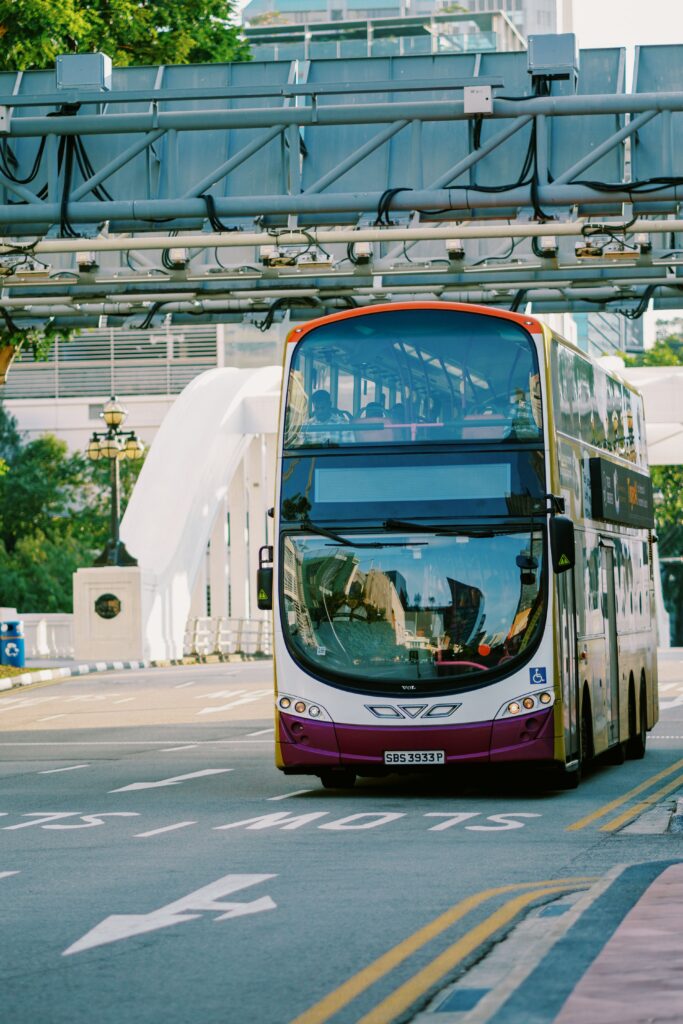
If you have never done the crossing, it is friendlier than it sounds. Cross-border buses leave from a handful of easy points on the Singapore side, including Queen Street, Kranji MRT, and Woodlands, and they run often enough that you rarely wait long. Tap on with a stored-value card or grab a ticket for one of the longer coaches, find your seat, and you are off.
Here is the part that catches first-timers off guard. You hop off at each checkpoint to clear immigration, then reboard a bus to carry on. Keep your ticket handy, because on the public services you can usually catch the next bus from the same operator rather than waiting for the exact one you started on. Queues permitting, the whole thing is a short and very doable ride.
Where it drops you is half the fun. Most cross-border buses land you right around JB Sentral and Bukit Chagar, steps from Johor Bahru City Square for shopping and a proper food-court session. From there you are close to the old town’s heritage streets and within easy reach of family favorites like LEGOLAND Malaysia and the Johor Premium Outlets. Carrying on to Kuala Lumpur, Malacca, or Genting Highlands? A through-coach from JB keeps you in one seat the whole way.
How to Plan Your Crossing While Both Options Run
Until the RTS Link reaches full service, the safest approach is to plan around the checkpoints, not just the vehicle. A few practical habits help:
- Cross mid-week and mid-morning when you can, because weekends, public holidays, and evenings see the worst congestion.
- Carry a stored-value card for public buses, and book longer coaches ahead of time, especially on Fridays and holiday eves.
- Keep your passport and any digital arrival cards ready before you reach immigration.
- Watch fare and schedule updates through the second half of 2026 as the RTS Link confirms its final pricing.
There is also a transition period to plan for. When the RTS Link first opens, it starts with a limited fleet and grows towards full capacity over the following months. Early on, peak-hour trains may fill quickly, so the bus remains a useful backup if you cannot board the service you wanted. Keeping both options open, a stored-value card for buses and an eye on rail timings, is the smartest way to travel during the changeover.
Cost matters too. For a solo commuter the few dollars’ difference between bus and train is small next to the time saved. For a family of four travelling together, those dollars add up, and a single coach fare can undercut four train tickets. Run the numbers for your own group before you decide.
Frequently Asked Questions
Will the RTS Link replace buses to JB?
No. The RTS Link will take a large share of daily commuters, but buses keep serving budget travellers, heavy-luggage trips, and destinations beyond the single rail stop at Bukit Chagar. Expect the two to run side by side.
How much will the RTS Link cost versus the bus?
The RTS Link is expected to cost about S$5–S$7 one way, while cross-border public buses run from roughly S$2 to S$4.80. The bus keeps the lower fare, and the train pays you back in saved time.
Is the bus or the RTS Link faster to JB?
The RTS Link is faster for the crossing itself, at about five minutes versus the bus, which shares road queues at the checkpoints. On a congested day the time gap is huge.
Do I still clear immigration twice on the bus?
Yes. On the bus you clear Singapore and Malaysian checkpoints separately. The RTS Link uses co-located clearance at the stations, which is part of why it is quicker.
The RTS Link is a real upgrade for the daily crossing, and many commuters will switch the moment it opens. But whether it is worth it depends on your trip. If you are travelling light at peak hour, the train will likely win. If you are carrying bags, travelling off-peak, or heading deeper into Malaysia, the bus still earns its place. Book early, watch the 2026 updates, and pick the option that fits the journey in front of you.